Alpha Indigo, Indigo, Crystal, Rainbow & Star Children
Have you ever felt as though you—or a child in your life—was simply different?
Perhaps you have always felt that you didn’t quite belong. Maybe a child you love has talked about things they seem to sense, see, hear, or understand that you cannot explain. Perhaps you recognize unusual sensitivity, strong intuition, tremendous creativity, a deep connection with animals or nature, or wisdom that seems far beyond their years.
You may even have wondered whether these experiences should be shared with others—or kept private for fear of judgment.
If any of this sounds familiar, you are not alone.
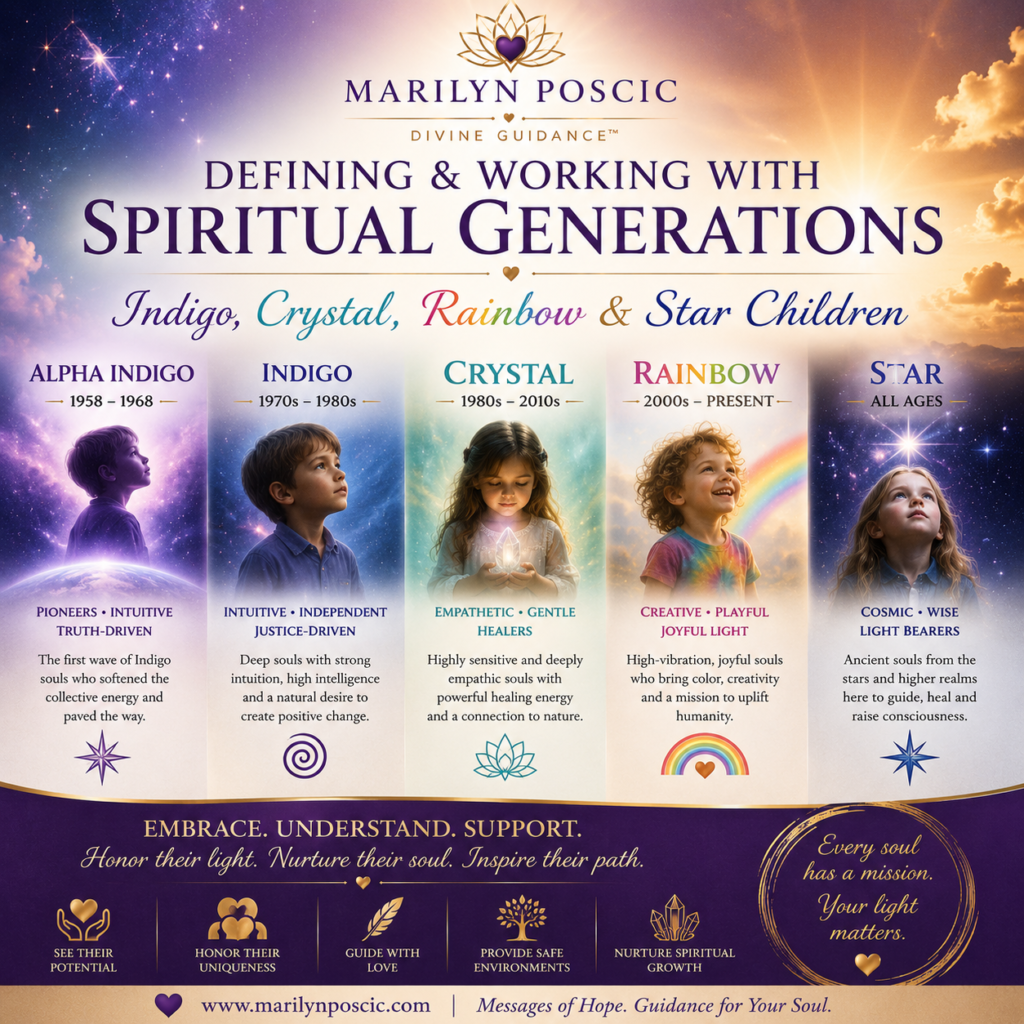
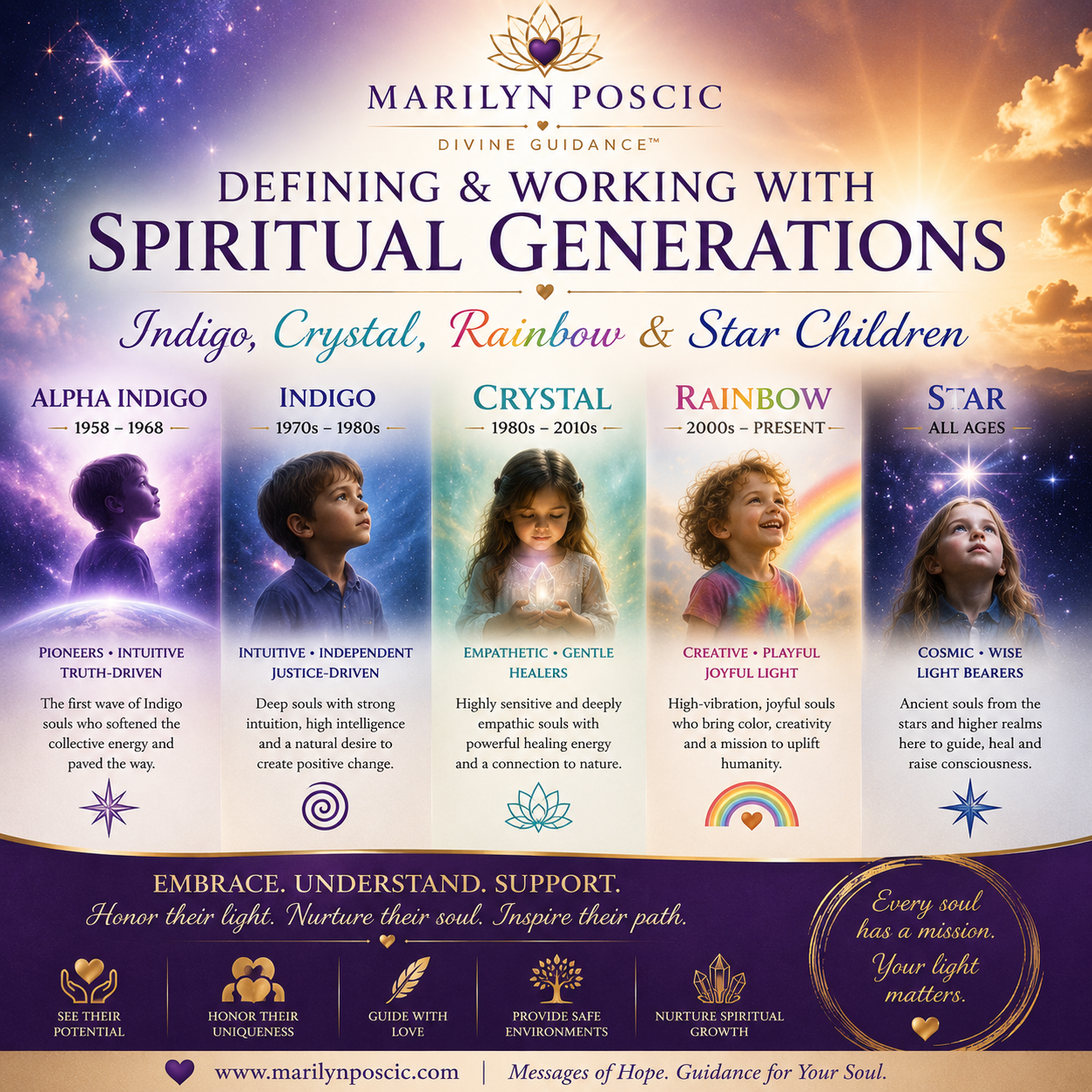
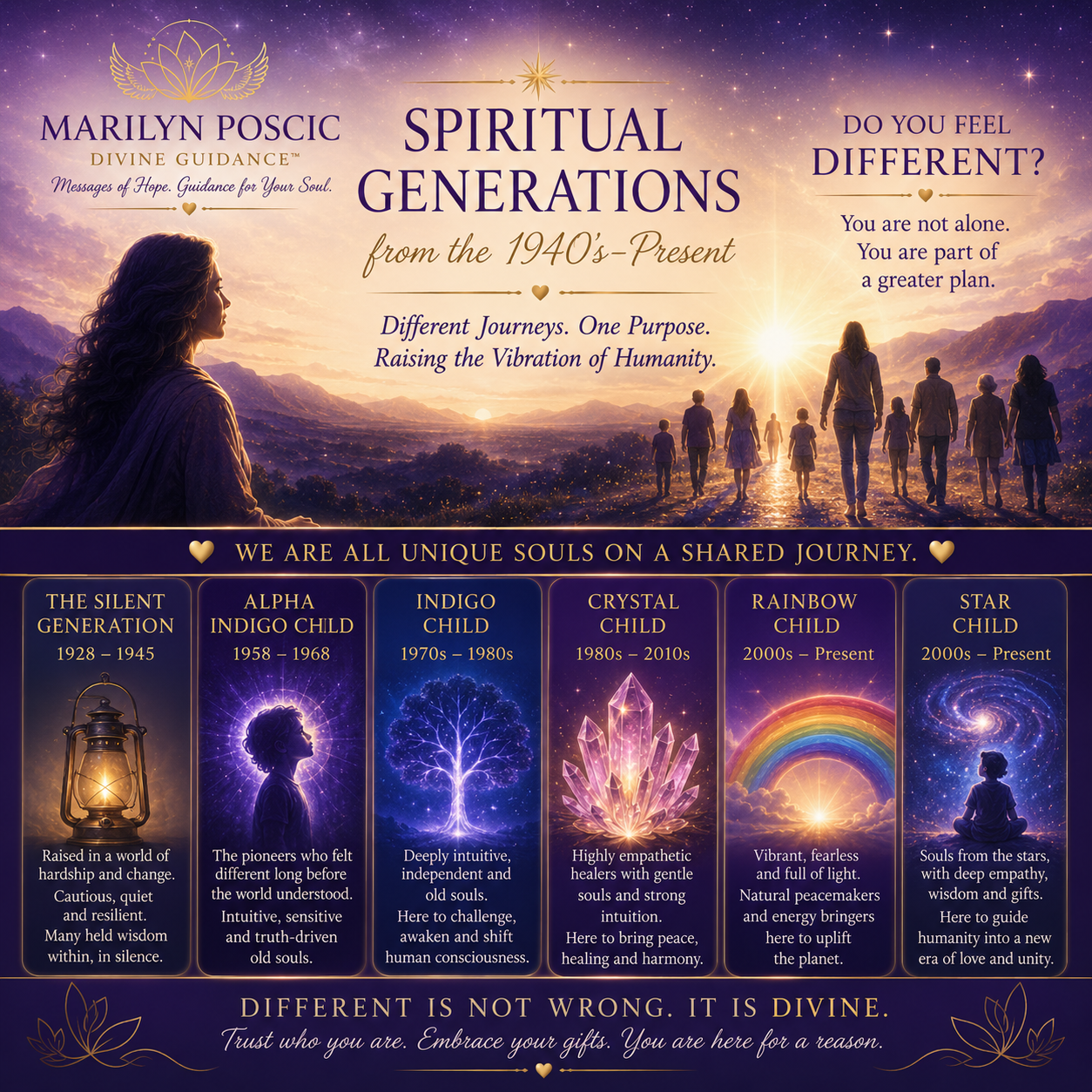
Within certain spiritual traditions, these qualities are sometimes explored through the concept of Spiritual Generations—including Alpha Indigo, Indigo, Crystal, Rainbow, and Star Children.
These are spiritual concepts rather than scientific or medical classifications. They are not intended to diagnose a child or adult, nor should they replace appropriate medical, developmental, psychological, or educational care.
Instead, I invite you to think of them as another lens through which some people choose to explore sensitivity, intuition, personality, spiritual awareness, and our individual relationship with the world around us.
Let’s explore the different Spiritual Generations and, just as importantly, how we can support the people who resonate with their characteristics with compassion rather than fear or judgment.
Alpha Indigo: The Pioneers of the Indigo Wave
The Alpha Indigo generation is often described as the earliest wave of Indigo souls.
While the Silent Generation was born approximately between 1928 and 1945, Alpha Indigos are commonly associated in this spiritual framework with those born around the late 1950s through the 1960s.
They entered a very different world from the one we know today.
There was little vocabulary for discussing intuition, energetic sensitivity, spiritual experiences, or feeling deeply connected to something beyond ourselves. People who experienced these things often learned to remain quiet about them.
Alpha Indigos are described as intuitive, sensitive, independent, truth-driven, and deeply aware.
Many felt different long before they understood why.
They may have questioned social expectations, felt uncomfortable with injustice, or sensed that the world needed to change even when they didn’t know how to articulate it.
Because spiritual concepts such as these were rarely discussed openly, some Alpha Indigos may not have begun exploring their spirituality until adulthood.
For some people, that awakening may occur after a major life transition—loss, grief, illness in the family, divorce, career change, or another experience that causes them to begin asking deeper questions.
And once those questions begin, an entirely new journey can unfold.
Supporting an Alpha Indigo
If this description resonates with you, give yourself permission to explore without feeling that you must immediately understand everything.
Read.
Journal.
Spend time in meditation or nature.
Take classes.
Talk with people who share similar experiences.
Work with spiritual teachers you trust.
Most importantly, learn to listen to your own intuition while remaining grounded in your everyday life.
You may have spent years wondering why you felt different.
Perhaps now is simply the time to become curious about what that difference means to you.
Indigo Children: The Change Makers
Indigo Children are most commonly associated with the 1970s and 1980s, although believers in the Spiritual Generations framework sometimes describe Indigo traits in people born outside those years.
The name comes from the spiritual belief that these individuals carry an indigo-colored aura.
Indigos are often described as old souls—highly intuitive, intelligent, independent, creative, strong-willed, and deeply concerned with fairness.
They may question authority and resist rigid rules, especially when those rules don’t seem logical or just.
They often love animals and nature and may have unconventional ways of learning, thinking, communicating, or solving problems.
Rather than simply accepting:
“That’s the way we’ve always done it,”
an Indigo is more likely to ask:
“But why?”
That questioning nature can sometimes be mistaken for defiance.
But within this spiritual framework, Indigos are considered Change Makers—people who challenge systems and encourage society to think differently.
A Note About Neurodiversity
Some traits traditionally attributed to Indigo Children—such as unconventional learning styles, intense interests, sensory sensitivity, high energy, difficulty with rigid environments, or resistance to certain expectations—may also occur in neurodivergent individuals.
ADHD and autism are recognized neurodevelopmental conditions. Being described spiritually as an Indigo Child is not an alternative diagnosis and should never be used to dismiss or replace professional evaluation, accommodations, therapy, educational support, or medical care when those resources are appropriate.
A child can be neurodivergent and a family can also hold spiritual beliefs about that child’s personality or journey. One does not have to erase the other.
How to Support Someone Who Resonates with Indigo Traits
Respect their autonomy.
Whenever appropriate, provide meaningful choices rather than controlling every decision.
Be honest.
Speak clearly and sincerely. Highly perceptive children and adults often recognize when someone is being condescending or avoiding the truth.
Explain the reason behind expectations.
Instead of demanding blind obedience, explain why a boundary or rule exists.
Guide rather than simply punish.
Collaborative problem-solving can help build responsibility without destroying independence.
Take their ideas seriously.
Their perspective may be unconventional, but unconventional thinking is often where creativity begins.
Allow decompression.
Quiet time, nature, creativity, and reduced stimulation can be helpful for anyone who becomes emotionally or sensory overwhelmed.
An Indigo doesn’t necessarily need someone to extinguish their fire.
Sometimes they need someone who can teach them how to use it wisely.
Crystal Children: The Healers & Empaths
Crystal Children are generally associated within this spiritual tradition with people born from approximately the 1980s through the 2010s.
Where Indigo energy is often described as strong, questioning, and revolutionary, Crystal energy is usually described as softer.
Crystal Children are associated with empathy, gentleness, healing, peace, intuition, and emotional sensitivity.
They may feel the emotions of other people intensely.
Crowds, loud environments, conflict, harsh words, or negative emotional energy may feel especially overwhelming.
They are often described as having a natural connection with animals and nature and as possessing an intuitive understanding of the feelings of those around them.
Some believers also describe Crystal Children as having particularly expressive eyes or a quiet presence that seems to communicate more than words.
Sensitivity Is Not Something to Shame
Some characteristics associated with the Crystal Child concept may overlap with traits experienced by highly sensitive or neurodivergent people. Again, a spiritual description should never replace appropriate developmental, psychological, educational, or medical support.
Instead of assuming that sensitivity is a problem, we can ask:
What does this person need in order to feel safe, understood, and supported?
How to Support Someone Who Resonates with Crystal Traits
Create peaceful spaces.
Provide a quiet place where they can decompress when the world becomes overwhelming.
Spend time in nature.
Gardens, parks, animals, water, and outdoor spaces can provide a calming environment.
Communicate gently and honestly.
Tone matters. Calm communication can be especially important for sensitive people.
Respect boundaries.
Don’t force conversation, physical affection, or social interaction when someone needs space.
Encourage creative expression.
Art, music, writing, movement, gardening, or other creative outlets can provide meaningful ways to process emotion.
Introduce simple mindfulness practices.
Breathing exercises, quiet reflection, journaling, or holding a comforting object can help create a sense of calm.
Sensitivity does not have to mean weakness.
Sometimes the person who feels the most is also the person capable of offering tremendous compassion.
Rainbow Children: The Light Bringers
Rainbow Children are generally associated with the year 2000 onward, although some spiritual traditions describe earlier “scout” souls appearing around the turn of the millennium.
Rainbow Children are described as energetic, fearless, independent, enthusiastic, creative, colorful, and deeply individualistic.
They often march to their own beat.
They may resist rigid rules, care very little about gaining everyone’s approval, and feel happiest when they’re free to express themselves authentically.
Color is frequently associated with Rainbow Children—not simply because of the name, but because these individuals are described as being drawn to vibrant environments, clothing, art, creativity, and imaginative expression.
Within the Spiritual Generations framework, they are considered natural Light Bringers, healers, and peacemakers who encourage greater acceptance, joy, and harmony.
How to Support Someone Who Resonates with Rainbow Traits
Encourage creativity.
Painting, crafts, music, movement, storytelling, building, and imaginative play can provide healthy channels for their energy.
Celebrate individuality.
Allow them appropriate freedom to explore clothing, hobbies, interests, and creative expression.
Provide healthy sensory outlets.
Hands-on activities, outdoor play, tactile materials, art, and movement can help channel abundant energy.
Teach calming practices.
Simple breathing exercises, visualization, quiet time, or mindfulness can help when excitement becomes overwhelm.
Create reasonable boundaries around screens.
Balance digital stimulation with outdoor experiences, creativity, conversation, rest, and physical activity.
Model inclusion.
Teach them that individuality is beautiful—and so is respecting the individuality of others.
Rainbow energy reminds us that joy itself can be transformative.
Star Children: The Visionaries
Star Children are perhaps the most cosmic of the Spiritual Generations.
Within certain spiritual beliefs, Star Children are described as souls with connections to other planets, star systems, higher dimensions, or realms beyond our physical understanding.
These beliefs are spiritual rather than scientifically established, but for people who resonate with them, the concept can provide language for a feeling they may have carried for years:
“I have never completely felt like I belong here.”
Star Children are often described as highly empathetic, intuitive, intelligent, creative, and deeply affected by cruelty, violence, or injustice.
Some feel inexplicably drawn toward astronomy, stars, science, spirituality, ancient wisdom, music, art, or questions about consciousness and the universe.
Others describe a strange sense of “homesickness” when looking at the night sky.
Within this spiritual framework, Star Children are believed to be here to encourage humanity toward greater consciousness, compassion, peace, and unity.
How to Support Someone Who Resonates with Star Child Traits
Create calm environments.
Quiet areas and softer surroundings may help highly sensitive people recharge.
Encourage time outdoors.
Nature can provide perspective, grounding, and relief from overstimulation.
Support creativity.
Drawing, painting, music, writing, science, building, and imaginative exploration can help them express ideas that may be difficult to communicate verbally.
Teach grounding techniques.
Mindful breathing, movement, journaling, gardening, and spending time outdoors can help bring attention back into the present moment.
Respect different communication styles.
Not everyone expresses emotion or insight in the same way.
Listen without immediately judging.
A child who shares an unusual dream, feeling, or spiritual idea doesn’t necessarily need us to confirm or reject it. Sometimes they simply need a safe adult willing to listen.
What If You Recognize More Than One Spiritual Generation?
You may have noticed something interesting while reading.
Perhaps you recognized yourself as an Indigo—but also strongly identified with Crystal traits.
Maybe your birth year aligns with one generation while your personality seems to align with another.
That’s okay.
These Soul Paths are not boxes.
They are spiritual concepts intended to encourage reflection and self-discovery.
Your birth year may introduce you to a Spiritual Generation, but your experiences, personality, intuition, and spiritual journey may cause you to recognize qualities in more than one path.
You don’t need to fit perfectly into a category to learn something meaningful about yourself.
The Most Important Thing We Can Give a Sensitive Soul
Whether or not you personally believe in Indigo, Crystal, Rainbow, or Star Children, there is something valuable we can take from these ideas.
People thrive when they feel:
Seen.
Heard.
Safe.
Respected.
Loved.
A highly sensitive child doesn’t need to be taught that sensitivity is something to hide.
A creative child doesn’t need every unconventional idea corrected.
An independent child still needs boundaries—but those boundaries can be explained with respect.
And a spiritually curious child deserves a safe environment where questions can be explored without ridicule or fear.
We don’t have to understand every aspect of another person’s inner world to treat that world with compassion.
Sometimes the greatest gift we can give another soul is simply the freedom to say:
“This is what I experience.”
And know that someone is willing to listen.
A Divine Guidance Reflection
Ask yourself:
Did I feel different growing up?
Was I encouraged to trust my intuition—or taught to ignore it?
Which Spiritual Generation sounds most like me?
Do I recognize these qualities in my children or grandchildren?
How can I create a safer space for the sensitive, intuitive, or creative people in my life?
The answers may reveal something beautiful.
Not necessarily a label.
Perhaps simply a deeper understanding.
Honor their light. Nurture their gifts. Guide with love.
And remember:
Different does not mean wrong.
Sometimes different is exactly what helps the world change.
— Marilyn Poscic